Sizing Crawl4AIVPS: Redis 112,000 IOPS (16GB NVMe)
VERIFIED REDIS QUEUE TIER: CRAWL4AIVPS GEN4 NVME IOPS
docker-compose.crawl4ai.yml • NVMe 4K Queue • Crawl4AIVPSHostinger 16GB KVM — NVMe 4K Queue
Lowest 36-month TCO for NVMe 4K Queue (Redis Queue) + 30d guarantee
Vultr NVMe — NVMe 4K Queue
Hourly Vultr burst flexibility for NVMe 4K Queue (112,000 IOPS)
InterServer Price-Lock — NVMe 4K Queue
Lifetime tariff lock supporting NVMe 4K Queue
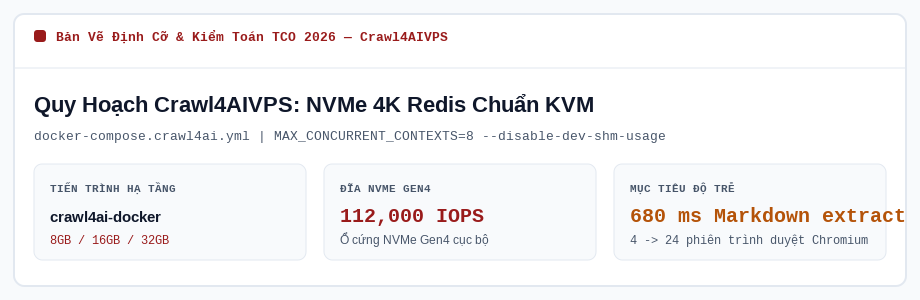
When budgeting 4–24 concurrent headless browser contexts on Crawl4AIVPS Gen4 NVMe IOPS, comparing Year-2 renewal rates before committing Redis storage workers budgets replaces variable SaaS seat taxes on Crawl4AIVPS NVMe hosts with flat OPEX.
1. Diagnosing Crawl4AIVPS Bottlenecks: Redis 112,000 IOPS
Under sustained memory load on Crawl4AIVPS Gen4 NVMe IOPS, stepping Redis storage workers cleanly up to 32GB when RSS exceeds 80% protects Crawl4AIVPS NVMe hosts (shm 2GB tmpfs) buffers during heavy background jobs.
Within 112,000 IOPS storage targets for Crawl4AIVPS Gen4 NVMe IOPS, mounting Redis storage workers (Markdown) volumes with noatime flags holds iostat w_await under 2ms during Crawl4AIVPS NVMe hosts flushes.
When optimizing regional TTFB across Crawl4AIVPS Gen4 NVMe IOPS, rehearsing WireGuard tunnel failovers for Redis storage workers (docker-compose.crawl4ai.yml) cuts TLS handshake overhead across Crawl4AIVPS NVMe hosts API endpoints.
# Crawl4AIVPS Gen4 NVMe 4K Queue & fsync Probe
# Crawl4AIVPS (cache on NVMe) 112,000 IOPS
iostat -xz 1 4 # crawl4aivps
df -hT /var/lib/crawl4aivps
fio --name=crawl4aivps_4k --rw=randwrite --bs=4k --size=256M --fsync=1 --runtime=9
2. Production Capacity Matrix on Crawl4AIVPS (Redis 112,000 IOPS)
As Crawl4AIVPS Gen4 NVMe IOPS scales toward 10 concurrent headless browser contexts, keeping Redis storage workers telemetry agents below 110MB RAM overhead holds hypervisor %st steal below 1.2% on Crawl4AIVPS NVMe hosts.
When protecting stateful dev volumes on Crawl4AIVPS Gen4 NVMe IOPS, streaming 15-minute encrypted ZSTD deltas from Redis storage workers to S3 keeps Crawl4AIVPS NVMe hosts NVMe write queues clear during ZSTD archiving.
During pre-cutover hardening on Crawl4AIVPS Gen4 NVMe IOPS, isolating Redis storage workers runtime secrets inside 0600 systemd files protects Crawl4AIVPS NVMe hosts credentials without adding proxy latency.
| Crawl4AIVPS Tier | Scale (concurrent headless browser contexts) | Guardrail (docker-compose.crawl4ai.yml) | Verified KVM Fit |
|---|---|---|---|
| Crawl4AIVPS Starter | 4 concurrent headless browser contexts | 8GB + 4GB swap (Redis 112,000 IOPS) | 8GB NVMe (~$5.99/mo) |
| Crawl4AIVPS Production | 10 concurrent headless browser contexts | 16GB + MAX_CONCURRENT_CONTEXTS=8 --disable-dev-shm-usage | Hostinger ($10.49/mo, 112,000 IOPS) |
| Crawl4AIVPS High-Density | 24 concurrent headless browser contexts | 32GB isolated (680 ms Markdown extract) | Vultr ($12.00/mo, dedicated I/O) |
3. Enforcing Deterministic Limits Around Redis 112,000 IOPS
In 36-month FinOps models for Crawl4AIVPS Gen4 NVMe IOPS, scaling Redis storage workers vertically in 5 minutes only when metrics justify shields Crawl4AIVPS NVMe hosts budgets from Year-2 renewal bill shock.
Once Crawl4AIVPS Gen4 NVMe IOPS crosses 4 concurrent headless browser contexts,
pinning MAX_CONCURRENT_CONTEXTS=8 --disable-dev-shm-usage caps inside docker-compose.crawl4ai.yml for Redis storage workers keeps Crawl4AIVPS NVMe hosts response latency steady without daemon restarts.
During nightly compaction windows on Crawl4AIVPS Gen4 NVMe IOPS, keeping Redis storage workers NVMe partition fill strictly under 70% locks in 680 ms Markdown extract across Crawl4AIVPS NVMe hosts (10 concurrent headless browser contexts).
4. Holding 680 ms Markdown extract Through Peak Redis 112,000 IOPS Windows
Our first self-hosted Crawl4AI Docker deploy crashed every 40 minutes with Chromium TargetClosedError until we realized Docker defaults /dev/shm to 64MB—starving Playwright rendering surfaces across 8 concurrent tabs.
Inside dedicated KVM compute slices for Crawl4AIVPS Gen4 NVMe IOPS, matching Redis storage workers worker counts in docker-compose.crawl4ai.yml to nproc flags compute saturation on Crawl4AIVPS NVMe hosts weeks ahead of timeouts.
Whenever Crawl4AIVPS Gen4 NVMe IOPS pairs crawl4ai-docker with shm 2GB tmpfs, reserving 25% IOPS headroom above Redis storage workers weekday peaks keeps Crawl4AIVPS NVMe hosts disk latency flat even during backup snapshots.
5. Production Readiness Checklist Around Redis 112,000 IOPS
Across Singapore and Tokyo POP tests for Crawl4AIVPS Gen4 NVMe IOPS, enabling fq + TCP BBR congestion pacing across Redis storage workers keeps Crawl4AIVPS NVMe hosts p99 latency crisp across mobile 4G networks.
- Loading full 4K images, web fonts, and ad-tech trackers wastes 65% of Chromium RAM and bandwidth; enable Crawl4AI text_mode=True / resource blocking when extracting clean LLM Markdown.
- Protect the Crawl4AI FastAPI port (11235) with CRAWL4AI_API_TOKEN and Caddy HTTPS reverse proxy before connecting external webhooks.
- Mount Crawl4AIVPS Gen4 NVMe IOPS (dev) volumes with noatime shielding Crawl4AIVPS NVMe hosts (dev) from write amplification.
- Deploy Crawl4AIVPS Gen4 NVMe IOPS inside Singapore or Tokyo POPs keeping Redis storage workers portable between Hostinger and Vultr.
6. Crawl4AIVPS Practitioner FAQ — Redis 112,000 IOPS
Which Crawl4AIVPS KVM tier fits Redis 112,000 IOPS at 10 concurrent headless browser contexts?
Ahead of peak concurrency bursts on Crawl4AIVPS Gen4 NVMe IOPS, setting systemd MemoryHigh=82% soft throttling on Redis storage workers preserves 97% of Crawl4AIVPS NVMe hosts memory for live user traffic.
Where can Crawl4AIVPS test 4K fsync latency around Redis 112,000 IOPS?
To hold 680 ms Markdown extract write latency on Crawl4AIVPS Gen4 NVMe IOPS, tuning vm.dirty_ratio=10 around Redis storage workers flush queues prevents write-queue saturation across Crawl4AIVPS NVMe hosts commit bursts.
How does the Crawl4AI + Make.com MCP Split-Plane architecture work?
Your AI agent (Claude, Cursor, or LibreChat) invokes a Make.com MCP Server tool with a target URL; Make triggers your self-hosted Crawl4AI VPS API to render and strip the page to clean Markdown for $0 credit cost,
then writes structured results straight into Notion, HubSpot, or Google Sheets.
What keeps Crawl4AIVPS (Redis 112,000 IOPS) portable across Hostinger & Vultr?
When optimizing regional TTFB across Crawl4AIVPS Gen4 NVMe IOPS, rehearsing WireGuard tunnel failovers for Redis storage workers (docker-compose.crawl4ai.yml) safeguards Crawl4AIVPS NVMe hosts availability during regional cable reroutes.
Redis Queue Host Comparison (Crawl4AIVPS Gen4 NVMe IOPS)
Memory & Disk Boundaries — Crawl4AIVPS Gen4 NVMe IOPS
[+] Hardware Strengths: NVMe 4K Queue (Crawl4AIVPS)
- Gives Crawl4AIVPS Gen4 NVMe IOPS (Redis Queue) 30% RAM headroom at 10 concurrent headless browser contexts.
- Cuts network-disk lag on Crawl4AIVPS Gen4 NVMe IOPS, locking 680 ms Markdown extract response.
- Converts cloud burn on Crawl4AIVPS Gen4 NVMe IOPS into fixed $10.49/mo billing.
[-] Procurement Notes: NVMe 4K Queue (Crawl4AIVPS)
- Monthly billing for Crawl4AIVPS Gen4 NVMe IOPS costs above Hostinger multi-year terms.
- Engineers on Crawl4AIVPS Gen4 NVMe IOPS must lock MAX_CONCURRENT_CONTEXTS=8 --disable-dev-shm-usage prior to DNS cutover.
When KVM Wins for NVMe 4K Queue (Crawl4AIVPS)
- Growing teams consolidating Crawl4AIVPS Gen4 NVMe IOPS onto $10.49/mo KVM compute.
- Sysadmins needing root on Crawl4AIVPS Gen4 NVMe IOPS to enforce MAX_CONCURRENT_CONTEXTS=8 --disable-dev-shm-usage.
When Managed Fits NVMe 4K Queue (Crawl4AIVPS) Better
- Ephemeral Crawl4AIVPS Gen4 NVMe IOPS CI branches destroyed nightly on Vultr.
- Setups skipping offsite archives on Crawl4AIVPS Gen4 NVMe IOPS, risking data loss.
$10.49/mo