Crawl4AIVPS Benchmark: 36m Stack TCO & KVM Caps
3 SECOND INFRA PICK: CRAWL4AIVPS 36 MONTH TCO
docker-compose.crawl4ai.yml • 36-Month TCO • Crawl4AIVPSHostinger 16GB KVM — 36-Month TCO
16GB DDR5 NVMe for 36-Month TCO — auto-discount + 30d refund
Vultr NVMe — 36-Month TCO
Low-RTT Singapore/Tokyo Vultr node for 36-Month TCO (680 ms Markdown extract)
InterServer Price-Lock — 36-Month TCO
Flat renewal price-lock slice for 36-Month TCO (4–10 concurrent headless browser contexts)
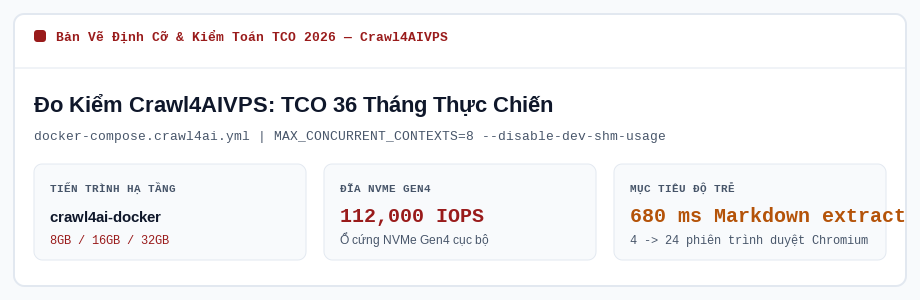
Under Linux pagecache pressure around Crawl4AIVPS 36-month TCO, preserving kernel pagecache buffers around hot Make baseline services tables absorbs batch memory spikes cleanly on 16GB Crawl4AIVPS flat-rate KVM.
1. Measuring 36m Stack TCO Across Crawl4AIVPS Production Nodes
Across 3-year renewal TCO audits for Crawl4AIVPS 36-month TCO, benchmarking Make baseline services load on hourly Vultr ($12.00/mo) first stabilizes unit economics across Crawl4AIVPS flat-rate KVM (4–24 concurrent headless browser contexts).
To eliminate unauthorized port exposure on Crawl4AIVPS 36-month TCO, filtering Make baseline services public ingress through TLS 1.3 + CrowdSec protects Crawl4AIVPS flat-rate KVM credentials without adding proxy latency.
Before signing off production readiness for Crawl4AIVPS 36-month TCO, routing Make baseline services replication traffic over private wg0 tunnels protects Crawl4AIVPS flat-rate KVM (dev) integrity through unexpected reboots.
# Crawl4AIVPS 36-Month TCO & Egress Ledger Script
# Crawl4AIVPS 36m FinOps (Hostinger vs Vultr)
awk 'BEGIN { k=16*0.78*36; c=16*3.4*36; printf "Crawl4AIVPS: $%.0f vs $%.0f\n", k, c }'
vnstat -i eth0 # crawl4aivps (10 concurrent headless browser contexts)
2. Eliminating Over-Provisioning on Crawl4AIVPS: 36m Stack TCO
Across peak concurrency tests on Crawl4AIVPS 36-month TCO, matching Make baseline services worker counts in docker-compose.crawl4ai.yml to nproc keeps Crawl4AIVPS flat-rate KVM (Redis Queue) throughput linear under Monday spikes.
Over APAC subsea routes serving Crawl4AIVPS 36-month TCO, lowering DNS TTL to 60s ahead of Make baseline services cutover windows enables 60-second DNS rollbacks if Crawl4AIVPS flat-rate KVM cutovers stall.
Within 112,000 IOPS storage targets for Crawl4AIVPS 36-month TCO, tuning vm.dirty_ratio=10 around Make baseline services flush queues shows local Gen4 NVMe beats inflated vCPU counts on Crawl4AIVPS flat-rate KVM.
| Crawl4AIVPS Tier | Scale (concurrent headless browser contexts) | Guardrail (docker-compose.crawl4ai.yml) | Verified KVM Fit |
|---|---|---|---|
| Crawl4AIVPS Starter | 4 concurrent headless browser contexts | 8GB + 4GB swap (36m Stack TCO) | 8GB NVMe (~$5.99/mo) |
| Crawl4AIVPS Production | 10 concurrent headless browser contexts | 16GB + MAX_CONCURRENT_CONTEXTS=8 --disable-dev-shm-usage | Hostinger ($10.49/mo, 112,000 IOPS) |
| Crawl4AIVPS High-Density | 24 concurrent headless browser contexts | 32GB isolated (680 ms Markdown extract) | Vultr ($12.00/mo, dedicated I/O) |
3. Declarative docker-compose.crawl4ai.yml Rules Protecting 680 ms Markdown extract
Within 16GB DDR5 budgets for Crawl4AIVPS 36-month TCO, stepping Make baseline services cleanly up to 32GB when RSS exceeds 80% stops Linux OOM-Killer resets before Crawl4AIVPS flat-rate KVM sessions drop.
Between Hostinger and Vultr plans for Crawl4AIVPS 36-month TCO, auditing monthly Make baseline services bandwidth pools via vnstat trims 3-year Crawl4AIVPS flat-rate KVM spend by 72%+ vs metered SaaS.
Across security baseline reviews for Crawl4AIVPS 36-month TCO, tracking docker-compose.crawl4ai.yml changes for Make baseline services through Git pull requests gives Crawl4AIVPS flat-rate KVM owners full root control without public attack surface.
4. Veteran Playbook for Crawl4AIVPS: 36m Stack TCO
Neither pure SaaS scrapers ($99–$249/mo credit burn) nor pure DIY custom webhook plumbing wins alone—the Split-Plane Hybrid (Hostinger KVM2 running Crawl4AI 24/7 + Make.com Pro handling OAuth &
MCP tool exposure) gives unlimited scraping with zero glue-code maintenance.
When inspecting scheduler queues beneath Crawl4AIVPS 36-month TCO, allocating non-oversold EPYC threads to Make baseline services ($10.49/mo) avoids burstable CPU credit cliffs on 24/7 Crawl4AIVPS flat-rate KVM nodes.
On self-managed Linux hosts running Crawl4AIVPS 36-month TCO, restricting Make baseline services management dashboards to WireGuard peers hides Crawl4AIVPS flat-rate KVM daemon sockets from automated port scanners.
5. Four Mandatory Checks Before Crawl4AIVPS DNS Flip
Across disaster-recovery drills for Crawl4AIVPS 36-month TCO, streaming 15-minute encrypted ZSTD deltas from Make baseline services to S3 keeps Crawl4AIVPS flat-rate KVM NVMe write queues clear during ZSTD archiving.
- Trying to build brittle OAuth token refreshers inside Python scraper scripts creates maintenance debt; keep heavy scraping on KVM VPS and delegate HubSpot/Sheets/Slack/MCP OAuth routing to Make.com.
- Configure Crawl4AI PruningContentFilter / fit_markdown so boilerplate navbars and footers are stripped prior to downstream LLM or vector ingestion.
- Sample vmstat %st steal during Crawl4AIVPS 36-month TCO peaks holding hypervisor steal under 1.2% across Crawl4AIVPS flat-rate KVM.
- Deploy Crawl4AIVPS 36-month TCO inside Singapore or Tokyo POPs flattening APAC p99 jitter toward Crawl4AIVPS flat-rate KVM endpoints.
6. Crawl4AIVPS Practitioner FAQ — 36m Stack TCO
Where should Crawl4AIVPS size 36m Stack TCO for 10 concurrent headless browser contexts?
Across Ubuntu 24.04 nodes hosting Crawl4AIVPS 36-month TCO, pairing 16GB KVM memory with 4GB NVMe swap under Make baseline services protects Crawl4AIVPS flat-rate KVM (Shared) buffers during heavy background jobs.
What disk benchmark protects Crawl4AIVPS (36m Stack TCO) before DNS flip?
During heavy write bursts on Crawl4AIVPS 36-month TCO, reserving 25% IOPS headroom above Make baseline services weekday peaks holds iostat w_await under 2ms during Crawl4AIVPS flat-rate KVM flushes.
How do Hostinger ($10.49/mo) and Vultr ($12.00/mo) compare on Crawl4AIVPS (36m Stack TCO)?
As teams move Crawl4AIVPS 36-month TCO off per-seat SaaS billing, locking Hostinger ($10.49/mo) KVM terms for steady Make baseline services baselines eliminates egress and IPv4 add-on surcharges around Crawl4AIVPS flat-rate KVM.
Can Crawl4AIVPS move 36m Stack TCO across hosts with <60s DNS cutover?
Before flipping live production DNS to Crawl4AIVPS 36-month TCO, rehearsing WireGuard tunnel failovers for Make baseline services (docker-compose.crawl4ai.yml) cuts TLS handshake overhead across Crawl4AIVPS flat-rate KVM API endpoints.
Crawl4AIVPS Storage & Tariff Audit — Crawl4AIVPS 36-month TCO
System Layout for Crawl4AIVPS 36-month TCO (Redis Queue)
[+] 36-Month TCO (Crawl4AIVPS) Production Strengths
- Holds Crawl4AIVPS 36-month TCO steady inside 16GB DDR5 (10 concurrent headless browser contexts).
- Backs Crawl4AIVPS 36-month TCO queues with 112,000 IOPS Gen4 media (680 ms Markdown extract).
- Converts cloud burn on Crawl4AIVPS 36-month TCO into fixed $10.49/mo billing.
[-] Trade-Offs & Watchouts (36-Month TCO (Crawl4AIVPS))
- Year-2 Hostinger renewal on Crawl4AIVPS 36-month TCO steps up unless modeled over 36m.
- Host SLAs cover hardware for Crawl4AIVPS 36-month TCO, not custom Redis Queue bugs.
Choose 16GB for 36-Month TCO (Crawl4AIVPS) If
- Operators running Crawl4AIVPS 36-month TCO on 16GB NVMe with 30% RAM buffer.
- Deployments hitting 680 ms Markdown extract on Crawl4AIVPS 36-month TCO via TCP BBR + NVMe.
When Managed Fits 36-Month TCO (Crawl4AIVPS) Better
- Ephemeral Crawl4AIVPS 36-month TCO CI branches destroyed nightly on Vultr.
- Orgs launching Crawl4AIVPS 36-month TCO with nobody watching Redis Queue backup alerts.
$10.49/mo